

There are different types of therapy available and it can be confusing to know what may be best for you. The most common forms of therapy are CBT and counselling. CBT is clinically recommended as treatment for common mental health difficulties.
CBT is not only for treating mental ill health. It can also help promote mental wellbeing and prevent illness. For example, stress, low self-esteem and perfectionism can be risk factors for mental health problems such as anxiety and depression. CBT for self esteem, perfectionism and stress may therefore help you learn coping strategies to prevent your mental wellbeing from deteriorating.
Cognitive Behavioural Therapy (CBT)
 Cognitive Behavioural Therapy (CBT) focuses on how the way we think and behave affects the way we feel.
Imagine you have an important online meeting and just before you are due to join, your internet connection drops. How would you respond?
Here are examples of two different responses:
Response 1:



Response 2:




Learn The Skills to Change Your Response with CBT
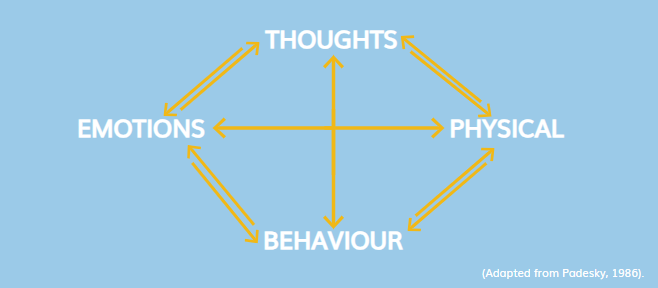
We can’t always change or control situations, but with CBT, we can learn to change the way we respond to them. This then helps us improve the way we feel. The four areas we’ve looked at – the way we think, behave, feel emotionally and physically – are all inter-related. This means that a change in one areas affects the others too.
We aim to help you develop a CBT toolkit so that you have a variety of tools, techniques and exercises that you can use to help improve your mental health and wellbeing.



If this sounds like an approach you would benefit from, Contact Us now to find out how we van help you get started with your CBT journey.
 Want to learn more? about CBT You might enjoy the following:
- What is CBT Anyway?
- What to Expect from Cognitive Behavioural Therapy (CBT)
- 10 Top Tips for Getting The Most out of CBT

