
Obsessive-Compulsive Disorder (OCD) is yet to be well understood by the general public. OCD is stereotypically associated with cleaning, ordering and being overly concerned with hygiene and neatness. People often describe themselves or others as ‘a bit OCD’ in response to being particular about things, but there’s much more to it than this. OCD isn’t something you have a ‘bit of’ – it’s a clinically diagnosable anxiety disorder that can be incredibly debilitating. By taking time to learn even a little about it, we can help break the stigma that acts as a barrier to those who are struggling the most from seeking the help available.
 Fortunately, we have gained a good clinical understanding of it and have effective treatment available. OCD involves obsessive thoughts that cause anxiety. Compulsive actions are then taken in an attempt to get rid of the anxiety. Purdon and Clark, the authors of Overcoming Obsessive Thoughts, highlight that:
“The CBT model of OCD begins with the assertion that everyone has unwanted intrusive thoughts. It is likely that the thoughts, images, or impulses that are relevant to your most important goals and sense of identity are the ones most likely to grab your attention.”
In OCD, it is these very thoughts that cause the distress.
Obsessions in Obsessive-Compulsive Disorder
An obsession may be a thought, image or urge. They are unwanted, and are often described as intrusive. This means they occur unintentionally, rather than being thoughts that we actively think of. Obsessions can cause you to feel distressing emotions such as anxiety, shame and disgust, depending on their nature.
Intrusive Thoughts
Intrusive thoughts are those that pop up into our mind involuntarily. We all have them but with OCD, these thoughts are incredibly distressing. This because the thoughts go against the individual’s core values. They are also interpreted to be important and meaningful. For example, we may experience an intrusive thought about pushing a passing cyclist off their bike. Someone with OCD who places great value on being kind and considerate, or fears being bad, may assign meaning to this intrusive thought. Rather than disregard it as an odd thought, or feel confident that of course they would never do that.
For those with OCD, the very existence of the thought is interpreted to mean something fundamentally negative about themselves as a person. This person with OCD may think that having the thought means that they must want to do it. They may therefore believe that they are a bad and dangerous individual. This would then trigger distress and a compulsive reaction to get rid of the distress.
Compulsions in Obsessive-Compulsive Disorder
A compulsion is an action that is taken to get rid of anxiety. This may be a visible behaviour such as washing in response to thoughts about contamination or checking sockets in response to images of a house fire. It may be less overt, such as avoiding parks to avoid this risk of acting on the intrusive thought about pushing over a cyclist. Often there is a rational understanding that these actions aren’t truly necessary. However, the fear of not doing them ‘just in case’ they are necessary makes it incredibly difficult to not act on the urges.
The lack of control felt about the intrusive nature of obsessions can be very distressing. The strong urges to act on the compulsions can feel unbreakable. Some people may feel too embarrassed, afraid or ashamed to talk about their obsessions. However, in order for improvements to be made, OCD usually requires treatment.
Treatment for OCD
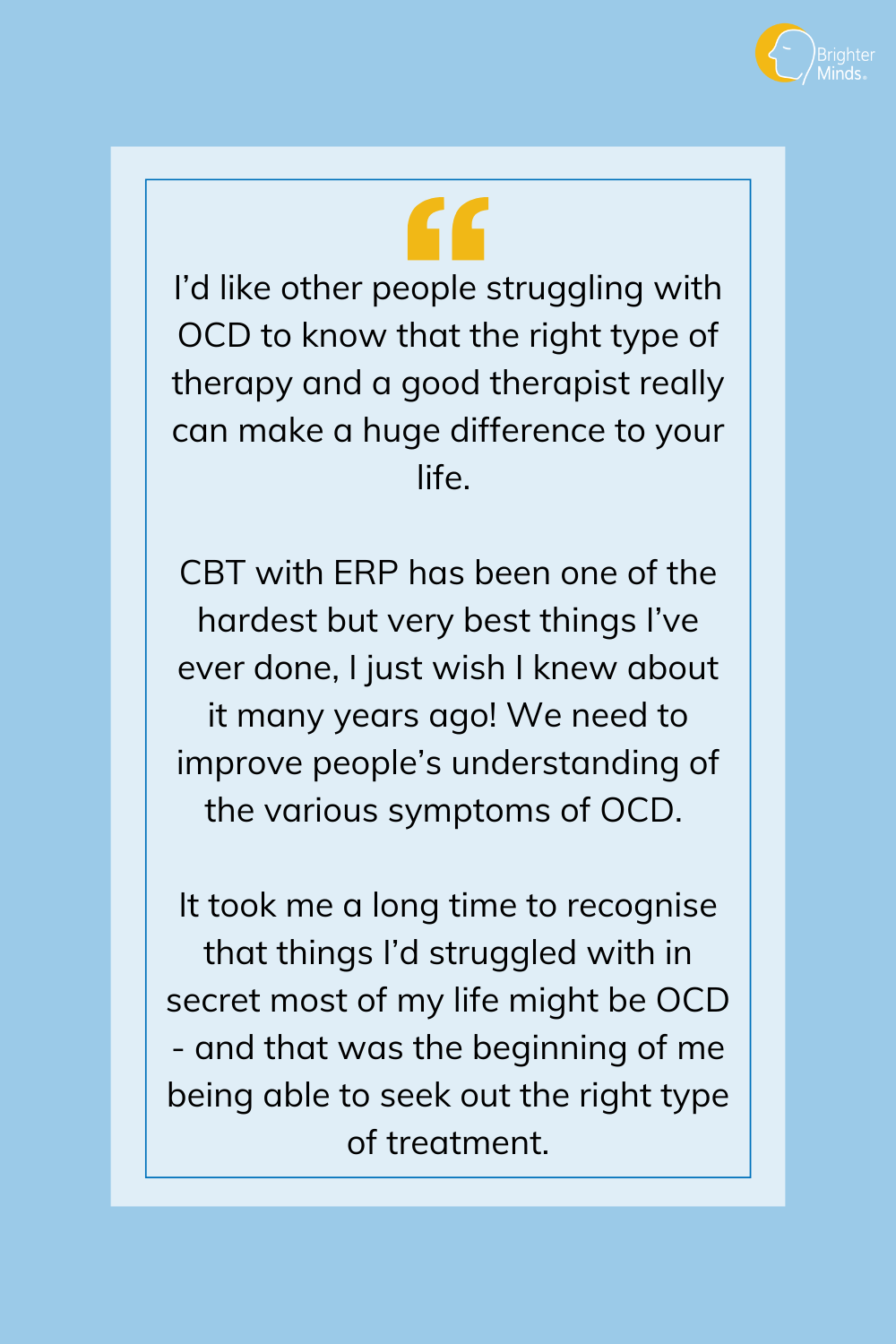
Quote shared from a Brighter Minds client.
The recommended and most effective treatment for OCD is Cognitive Behavioural Therapy (CBT) with the use of Exposure Response Prevention (ERP). Medication can also be used alongside this approach. Treatment in therapy focuses first on building an understanding of your experience of OCD, your current coping strategies and the factors maintaining your symptoms. The focus then moves on to exposure to the intrusions and obsessions while preventing the compulsive response to these.
The aim is to break the connection between obsessions and compulsions and help you build your tolerance to the distress. We understand that the distress comes down naturally to a point where it is either manageable, or no longer there. This exposure is done in a graded and supportive way. You need to be outside of your comfort zone but still within your window of tolerance. An experienced therapist will work at your pace and regular review progress with you.
Support
If you relate to the information in this blog and would like support with OCD, get in touch to find out more about starting CBT.
Updated October 2024.